
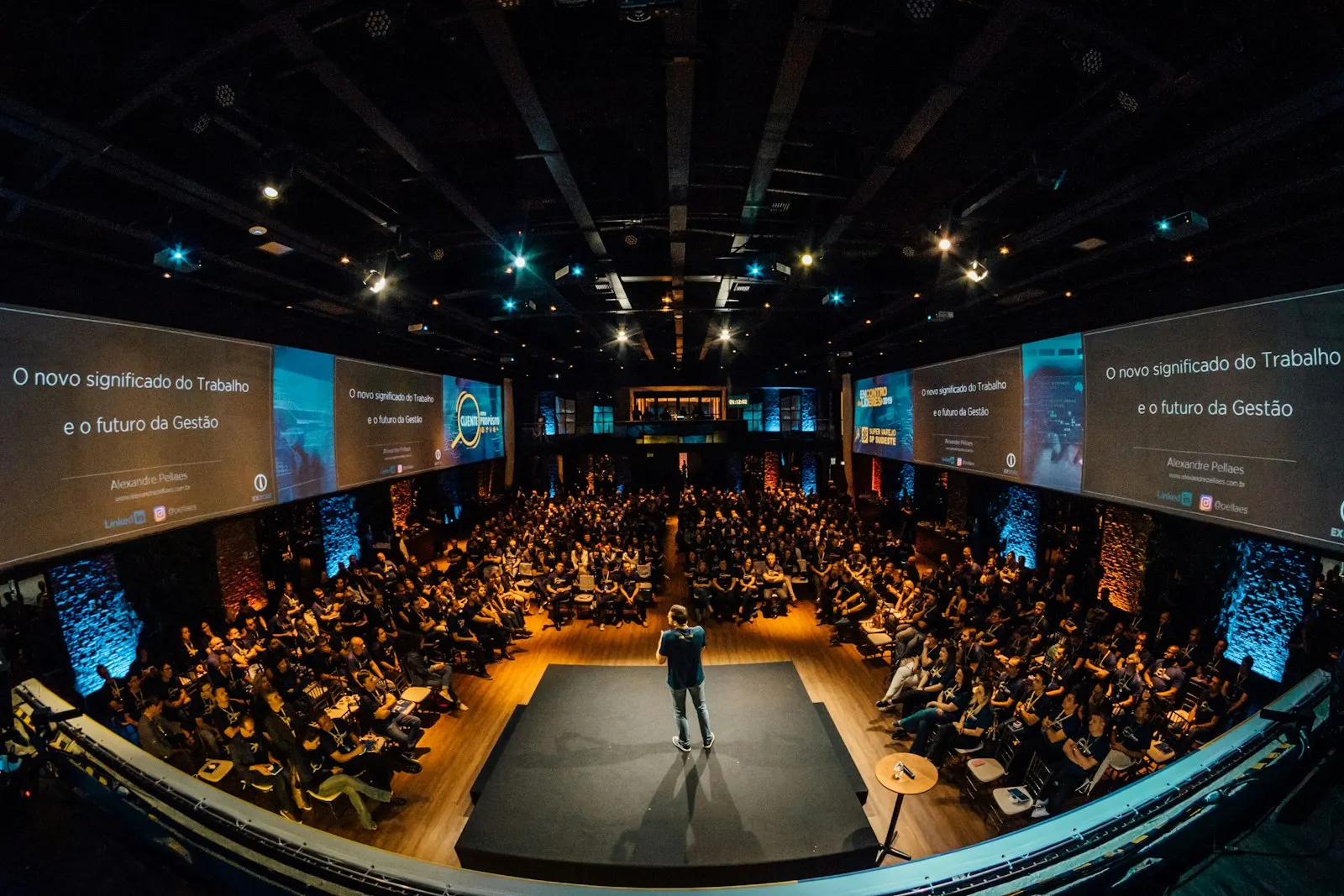
A speaker can leave a stage to warm applause and still have done very little. The audience enjoyed the stories, noted a few interesting facts and went back to doing exactly what they were doing before.
There is nothing wrong with an informative talk. But if you want to change how people think, feel or act, information alone is not enough. You need a point of view.
Here is the question I ask when helping someone prepare a keynote: “What would you like people to believe differently when they leave?”
Not “What topic are you covering?” Not “What slides do you have?” Those questions have their place. But the belief question forces you to decide what the talk is really for.
Find the belief
What should people believe differently when they leave?
Build a movement
From the belief they hold to the new way to see it.
Land the ending
A decision, a question or one small action.
Suppose your topic is confidence. That is an enormous subject. A sharper idea might be: “Confidence is not something you wait to feel before you speak. It is something you build by taking action before you feel ready.” Now the stories and examples have a job. They either help the audience see that idea or they do not.
Test the idea by putting it after these words: “I want the audience to walk away believing...” If your answer contains six unrelated points and three semicolons, you probably have a workshop rather than a keynote.
Once you have the idea, build the talk around a movement. Start with the belief your audience already holds. Show why that belief is incomplete or costly. Offer the new way to look at it. Prove it with lived experience, observation, evidence or a well-chosen example. Then give people a practical way to behave differently.
Stories matter because they help an audience experience a point rather than merely hear it. But a story should not be included only because it is funny, dramatic or happened to you. Ask what it reveals. If it reveals nothing, save it for dinner.
Endings matter too. Too many speakers finish with a summary of their earlier summary. A stronger ending gives the audience a decision, a question they cannot easily ignore or a small action they can take this week.
Being memorable is not about delivering the maximum number of memorable moments. It is about making sure they remember the thing that matters.
One idea does not mean one fact. You may need several facts, examples and contrasts. It means the audience can feel how all of those pieces belong together.
Being memorable is not about delivering the maximum number of memorable moments. It is about making sure they remember the thing that matters.
Next step: Building a keynote or TEDx talk? Bring the draft to a Room Review and we will find the belief at the centre of it. Or explore coaching for keynote, pitch and TEDx speakers.

Meet Richard
Business head. Performer’s instinct.
I’ve spent twenty years in the rooms I now coach people to walk into, working across operations, communications and leadership.
I didn’t start out feeling comfortable in them. I knew my subject. Feeling at ease in front of people was another matter.
Drama, stand-up, writing and improv taught me what changes when you stop clinging to the script and start connecting with the room.
That’s what I bring to our work: clear thinking, honest feedback and plenty of room to try things.
Serious about the work.
Room for your personality.
 Founder, Life Is A Speech