Not sure where to start? Take the free Stage Intelligence Read and get your communication profile in 4 minutes. Not sure where to start? Get your speaking profile in 4 minutes. Take the free ReadFree Read

RICHARD FORD EXECUTIVE COMMUNICATION COACHING

Teams and organisations

Your team has an important update. Not everyone is telling the same story.

Bring a real meeting, pitch or team presentation. We will get clear on what the room needs to hear.

Request a Room Review

40 minutes on Zoom. £95. One situation, practical feedback.

A facilitator speaking to people seated around tables in a workshop

Your next room

Start with the situation. Make the message clearer.

  1. What goes wrong

    Different people start in different places. The audience struggles to see the decision or what happens next.

  2. How we work on it

    We agree the central message, rehearse the handovers and practise challenging questions together.

  3. A short example

    Instead of: ‘We are making progress across workstreams.’ Try: ‘We are on track for the 14th, but need one review by Wednesday.’

    Illustration only, not a client result.
  4. Your next step

    Planning a workshop for several people? Send me a short team brief for a tailored proposal. A Room Review is for one person working on one situation.

I run practical communication workshops for teams, built around the situations your people actually face. Delivered online, or in person by arrangement. Send a short brief and I will reply within 24 hours.

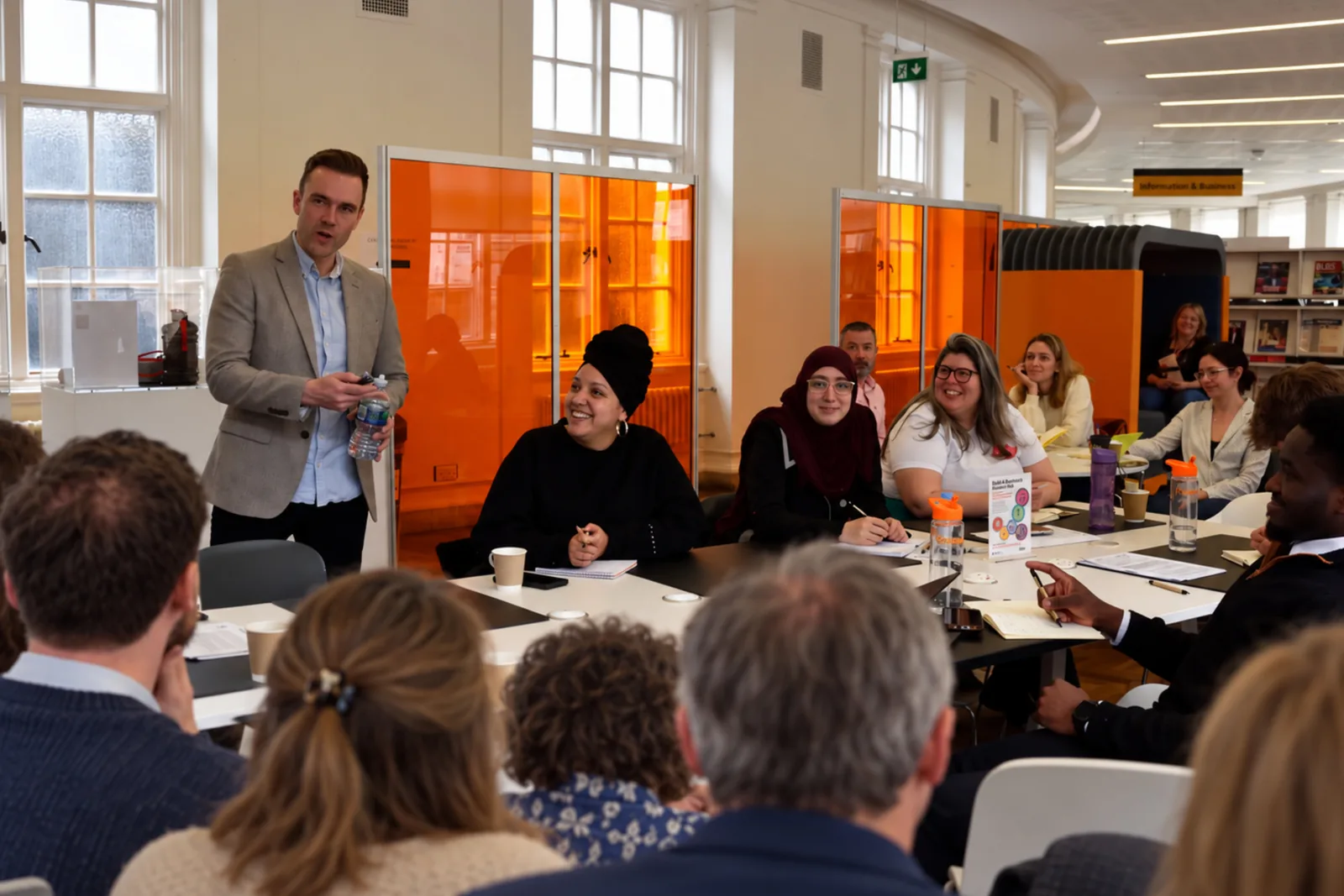
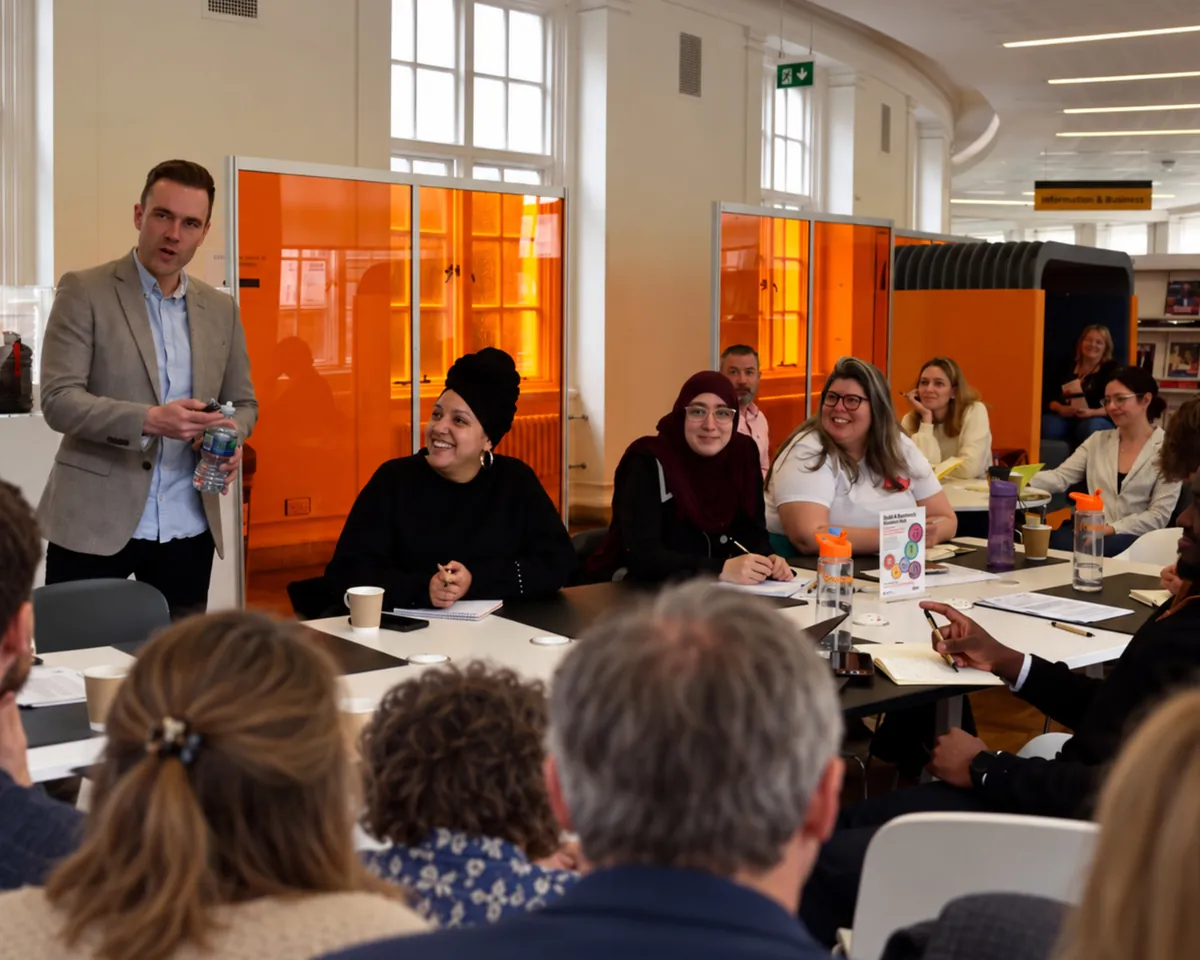
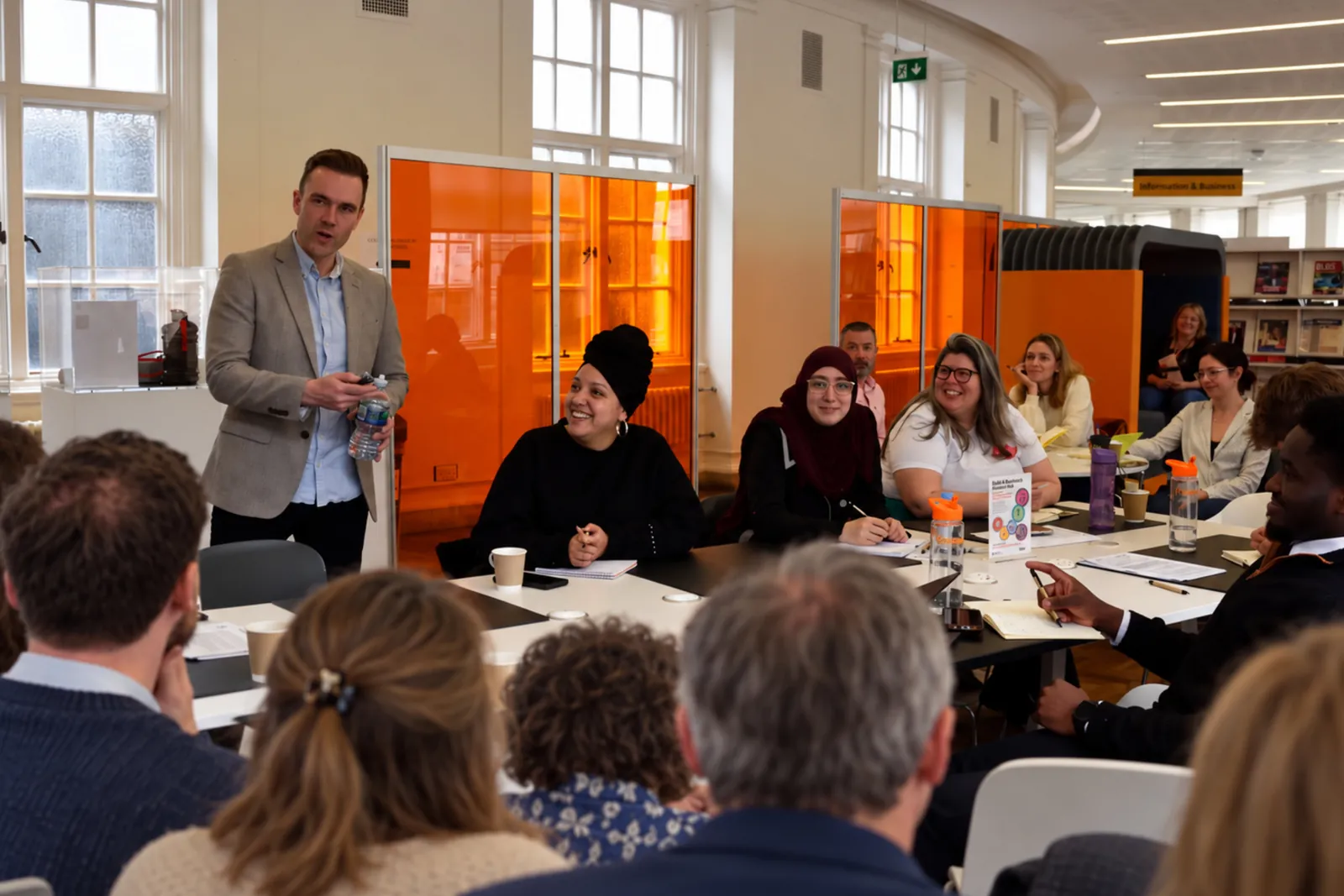
Richard standing to speak to a smiling group seated around a table in a library, notebooks and water bottles in front of them

Teams and organisations

Workshops
for teams.

Practical training that helps leaders and teams speak with clarity, presence and purpose.

I listen first, then rehearse on your real material so the skills last.

Request a tailored proposal See workshop formats

Who it’s for

Teams that need
to be heard.

  • Leadership teams

    Town halls, board updates and the conversations that decide things.

  • Teams that pitch or present

    Sales, client and internal presentations that need to be clear and short.

  • Organisations growing their speakers

    Give people the confidence to represent the business in public.

How we work together

Start with your team, not a template.

We talk about the room your people are walking into, who they need to communicate with and what needs to change. That shapes the workshop around your people, your goals and your real situations.

  1. Understand the challenge

    We talk about the room your people are walking into, who they need to communicate with and what needs to change. That shapes the workshop around your people, your goals and your real situations.

  2. Work on what matters

    Your team works on its own presentations, pitches, updates and conversations. People practise aloud, try different approaches and discover what works, rather than relying on generic case studies.

  3. Improve in the moment

    I provide clear, kind and honest feedback while people practise. We make adjustments together, giving participants the chance to experience what works and why.

  4. Take it back to work

    We focus on practical approaches participants can apply to their everyday communication. Where appropriate, follow-up support can help people continue developing their skills.

Sample agendas

A half day
or a full day?

Compare two starting formats. Both are examples, not fixed packages.

About 3.5 hours

  • 30 minThe room you are walking intoWho the team speaks to, what is at stake and what needs to change.
  • 60 minShape the messageEach person works on a real piece of their own material.
  • 60 minPresence and deliveryVoice, pace, pauses and body language, in pairs and in front of the group.
  • 45 minRehearse and get feedbackShort run-throughs, with honest and specific notes.
  • 15 minCloseOne thing each person will do next.

These are samples. I shape each workshop around your group, your goal and your date, and I can run it online or in person.

Before and after · the team update

Same meeting. A clearer update.

A team update gets better when it says where things stand, what has moved and what is needed.

Before

“We have made good progress across several workstreams, and there are a few dependencies we are still working through.”

After

“We are on track for the 14th. The content is now the slowest part, and I need Priya to review the product pages by Wednesday.”

An illustration of the shift. Not a client result.

What your team leaves with

What changes
after the day.

  • A clearer messageFor a real talk, pitch or update coming up, not a case study.
  • A rehearsed versionEach person has practised it out loud and had honest feedback.
  • Shared languageThe team can give each other useful notes after the day.
  • A follow-upA check-in so the skills stay in use.

What working together looks like

Real material.
Useful feedback.

Bring the presentations, leadership updates and conversations your people actually need to deliver. Work on them in the session, practise out loud, and take specific notes back to work.

Richard talking with a workshop group seated around a table, smiling and taking notes
See results and client journeys

For organisations

Planning a workshop or programme?

  • NDA available. I am happy to sign one before we talk about your people or your material.
  • Quoted to fit. Workshop prices are based on the number of people and the length of the session.

Contact me for more details. Request a tailored proposal

Client story

The organisation that turned presentation training into better everyday communication

The Northbridge Consulting team

Professional services business, 14 participants

Client
Northbridge Consulting, a professional services business.
Participants
14 project leads and senior managers.
The challenge
Unclear client updates, inconsistent presentations and meetings that rarely ended with an agreed decision.

The real transformation

The workshop did more than improve individual presentations. It gave the team a shared way to communicate and challenge each other constructively.

*Client story. Names and company details changed for data protection

Real teams. Practical communication.

Better conversations make better teams.

Most people don’t need another PowerPoint explaining the importance of communication.

They already know it’s important. What they need is a chance to practise the difficult bits, whether that’s getting to the point, speaking confidently in meetings or handling questions they weren’t expecting.

That’s what my workshops are built around.

What organisations say

Richard has a fantastic way of putting people at ease while still challenging them to think differently. The workshop was engaging, practical and full of moments where people recognised their own communication habits. What impressed us most was how quickly he got everyone involved, including people who wouldn’t normally put themselves forward. The feedback from the team was overwhelmingly positive, and people left with things they could actually use rather than another set of slides to forget about.

Norwood

Inside a team workshop

Example: Helping managers get their message across

The situation

A group of managers knew their jobs inside out. The difficulty came when they needed to explain their thinking to other people.

Updates ran too long. Meetings wandered. Some people spoke confidently while others had good ideas but struggled to get them heard.

What we worked on

We used their everyday workplace situations to practise three things:

Getting to the point

Identifying what matters most and communicating it without burying people in background information.

Thinking on your feet

Handling unexpected questions, challenges and disagreements without losing the thread.

Making it land

Using structure, presence and delivery to help people listen, understand and remember.

Rather than giving people scripts, we worked on practical habits they could use in their own style.

The outcome

Participants finished with a clearer understanding of their communication habits, practical techniques to try and a personal priority to work on.

Let’s make it relevant to your people.

Tell me what your team is finding difficult, what you’d like to improve and how many people are involved.

I’ll suggest something practical, with no unnecessary bells and whistles.

Request a tailored proposal

A focused service

Team Presentation Workshop

A hands-on workshop where your team works on its own material, speaks to each other and gets feedback.

See what is included

Your team, your situation

Thinking about a workshop for your team?

Tell me the size of the group, the goal and the date. I’ll come back with a proposal.

Request a tailored proposal Want to try one session first? Request a Room Review

See what you get

A real Room Review report

The written report from a real Room Review, for an 18-minute conference keynote. The client said I could share it. Their name, organisation, role, event and date are removed.

This is an example of one-to-one coaching. It is not a result from a team workshop.

Click here for a sample output from the Room Review

PDF · 22 pages · Read it online instead

Who it's for

Teams that need to be heard

  • Leadership teams

    Town halls, board updates and the conversations that decide things.

  • Teams that pitch or present

    Sales, client and internal presentations that need to be clear and short.

  • Organisations growing their speakers

    Give people the confidence to represent the business in public.

What your team leaves with

What your team can take back to work

  • A clearer message

    For a real talk, pitch or update coming up, not a case study.

  • A rehearsed version

    Each person has practised it out loud and had honest feedback.

  • Shared language

    The team can give each other useful notes after the day.

  • A follow-up

    A check-in so the skills stay in use.

Team workshops · Away days · Group training

Get your team communicating with confidence.

Practical communication workshops for teams, leadership groups and organisations. We work on the real presentations, pitches and conversations your people face, and they get honest, specific feedback they can use.

  • Half-day workshops
  • Full-day workshops
  • Team away days
  • Online or in person
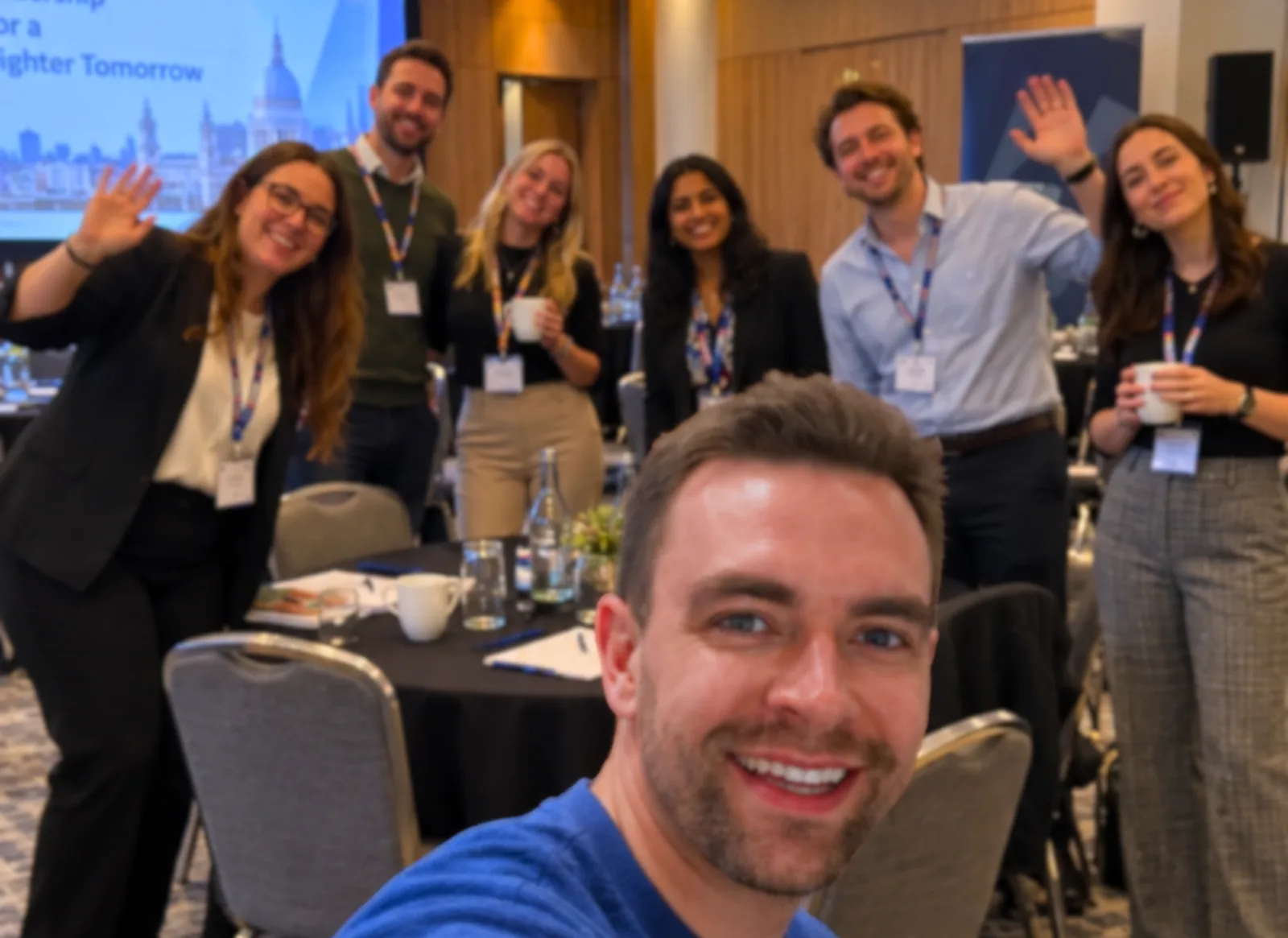
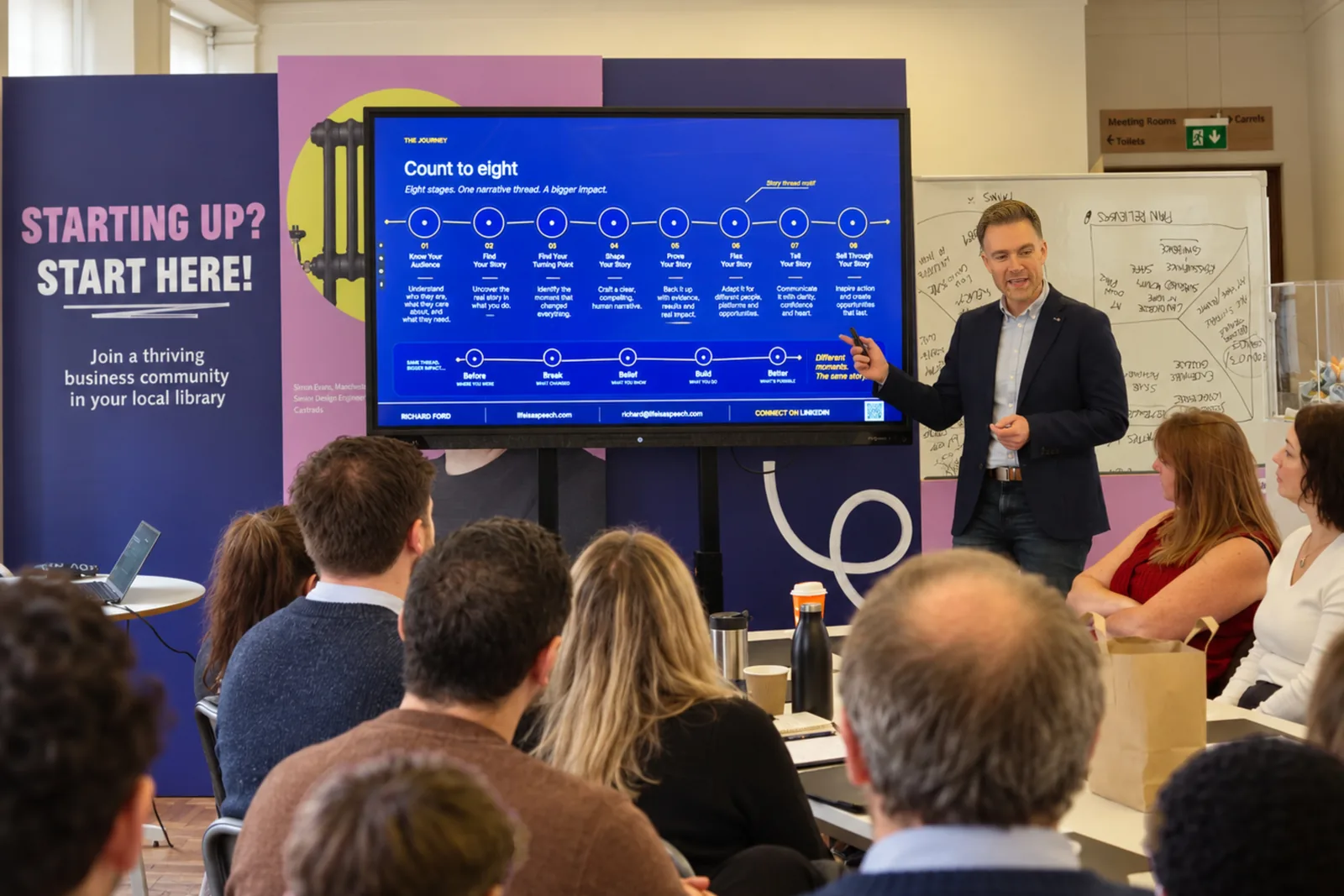
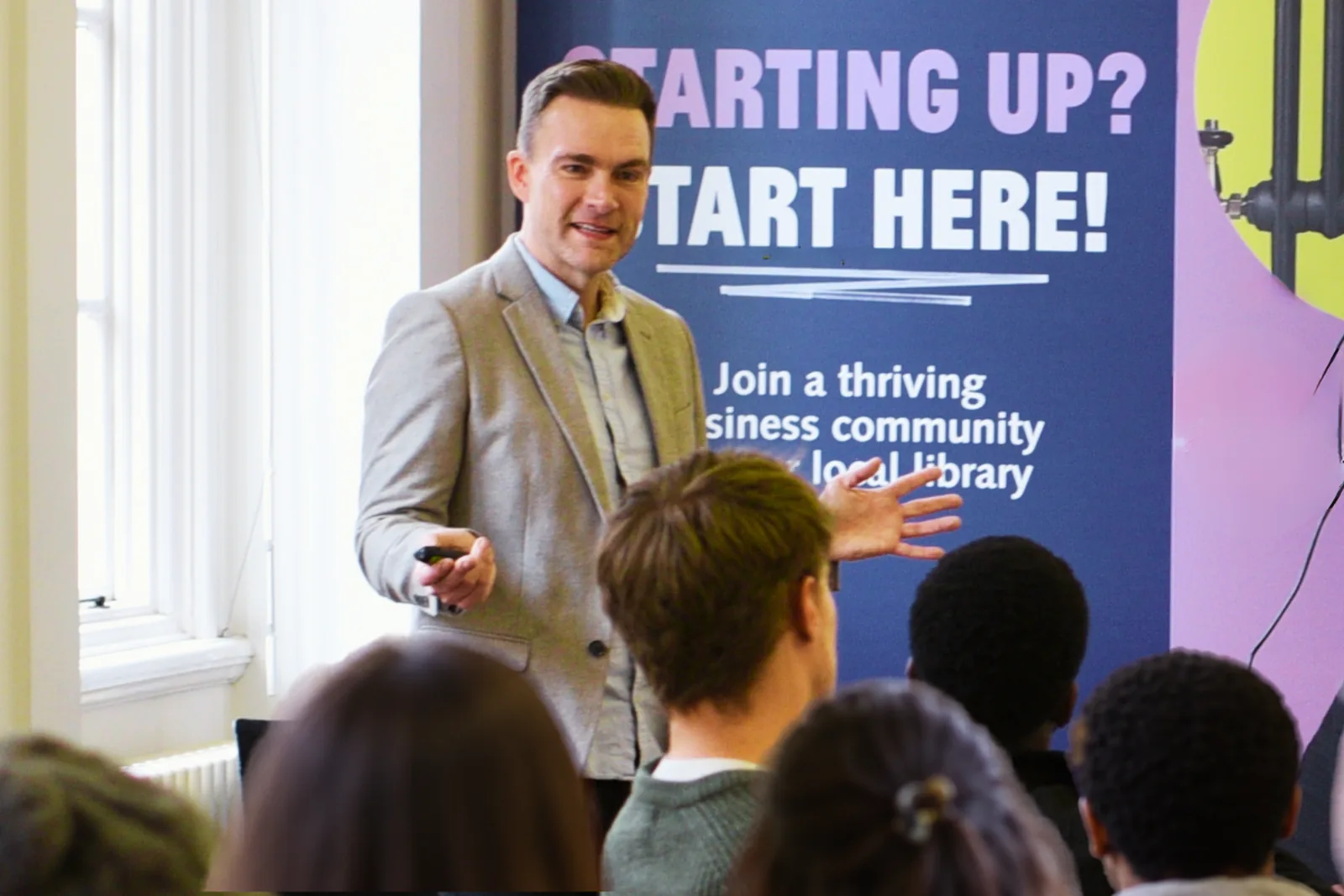
Richard taking a selfie with a smiling group waving behind him at a leadership workshopRichard pointing to the eight stage journey on a screen while talking to a seated workshop groupRichard standing to speak to a smiling group seated around a table in a libraryRichard speaking to a workshop audience in front of a Starting Up banner

01 / 04 · Understand the challenge

Start with your team, not a template.

We talk about the room your people are walking into, who they need to communicate with and what needs to change. That shapes the workshop around your people, your goals and your real situations.

How we work together

Richard taking a selfie with a smiling group waving behind him at a leadership workshop

01 / 04 · Understand the challenge

Start with your team, not a template.

We talk about the room your people are walking into, who they need to communicate with and what needs to change. That shapes the workshop around your people, your goals and your real situations.

  • Understand the challenge

    Start with your team, not a template.

    We talk about the room your people are walking into, who they need to communicate with and what needs to change. That shapes the workshop around your people, your goals and your real situations.

  • Work on what matters

    Less theory. More doing.

    Your team works on its own presentations, pitches, updates and conversations. People practise aloud, try different approaches and discover what works, rather than relying on generic case studies.

  • Improve in the moment

    Specific feedback people can use.

    I provide clear, kind and honest feedback while people practise. We make adjustments together, giving participants the chance to experience what works and why.

  • Take it back to work

    Learning that lasts beyond the day.

    We focus on practical approaches participants can apply to their everyday communication. Where appropriate, follow-up support can help people continue developing their skills.

Before and after · the team update

Same meeting. A clearer update.

A team update gets better when it says where things stand, what has moved and what is needed.

Before

“We have made good progress across several workstreams, and there are a few dependencies we are still working through.”

After

“We are on track for the 14th. The content is now the slowest part, and I need Priya to review the product pages by Wednesday.”

An illustration of the shift. Not a client result.

Client story

The organisation that turned presentation training into better everyday communication

The real transformation

The workshop did more than improve individual presentations. It gave the team a shared way to communicate and challenge each other constructively.

*Client story. Names and company details changed for data protection

Real teams. Practical communication.

Better conversations make better teams.

Most people don’t need another PowerPoint explaining the importance of communication.

They already know it’s important. What they need is a chance to practise the difficult bits, whether that’s getting to the point, speaking confidently in meetings or handling questions they weren’t expecting.

That’s what my workshops are built around.

What organisations say

Richard has a fantastic way of putting people at ease while still challenging them to think differently. The workshop was engaging, practical and full of moments where people recognised their own communication habits. What impressed us most was how quickly he got everyone involved, including people who wouldn’t normally put themselves forward. The feedback from the team was overwhelmingly positive, and people left with things they could actually use rather than another set of slides to forget about.

Norwood

Inside a team workshop

Example: Helping managers get their message across

The situation

A group of managers knew their jobs inside out. The difficulty came when they needed to explain their thinking to other people.

Updates ran too long. Meetings wandered. Some people spoke confidently while others had good ideas but struggled to get them heard.

What we worked on

We used their everyday workplace situations to practise three things:

Getting to the point

Identifying what matters most and communicating it without burying people in background information.

Thinking on your feet

Handling unexpected questions, challenges and disagreements without losing the thread.

Making it land

Using structure, presence and delivery to help people listen, understand and remember.

Rather than giving people scripts, we worked on practical habits they could use in their own style.

The outcome

Participants finished with a clearer understanding of their communication habits, practical techniques to try and a personal priority to work on.

Let’s make it relevant to your people.

Tell me what your team is finding difficult, what you’d like to improve and how many people are involved.

I’ll suggest something practical, with no unnecessary bells and whistles.

Request a tailored proposal

Sample agendas

A half day or a full day

Half day

About 3.5 hours

  1. 30 min
    The room you are walking into Who the team speaks to, what is at stake and what needs to change.
  2. 60 min
    Shape the message Each person works on a real piece of their own material.
  3. 60 min
    Presence and delivery Voice, pace, pauses and body language, in pairs and in front of the group.
  4. 45 min
    Rehearse and get feedback Short run-throughs, with honest and specific notes.
  5. 15 min
    Close One thing each person will do next.

Full day

About 6.5 hours

  1. Morning
    Everything in the half day The room, the message, and presence and delivery.
  2. Afternoon
    Handling questions and pressure The hard questions your team would rather not get.
  3. Afternoon
    Full rehearsal Each person delivers their real talk or pitch and gets feedback.
  4. Afternoon
    Team round The group presents together and sees what has changed.
  5. Close
    Follow-up plan How the skills stay in use after the day.

These are samples. I shape each workshop around your group, your goal and your date, and I can run it online or in person.

For organisations

Planning a workshop or programme?

  • NDA available. I am happy to sign one before we talk about your people or your material.
  • Quoted to fit. Workshop prices are based on the number of people and the length of the session.

Contact me for more details. Request a tailored proposal

A focused service

Team Presentation Workshop

A hands-on workshop where your team works on its own material, speaks to each other and gets feedback.

See what is included

See what you get

A real Room Review report

The written report from a real Room Review, for an 18-minute conference keynote. The client said I could share it. Their name, organisation, role, event and date are removed.

This is an example of one-to-one coaching. It is not a result from a team workshop.

Click here for a sample output from the Room Review

PDF · 22 pages · Read it online instead

This may not be for you if:

  • You want a one-off motivational talk or a generic training day. I start with your team, not a template.
  • You need a fixed price from a list. Format, pricing and availability are agreed after we talk.
  • You don't need it. I'll tell you honestly if that turns out to be the case.

Next step

Thinking about a workshop for your team?

Tell me the group size, the communication challenges and the dates you have in mind. We can shape the format around your people and goals.

Request a tailored proposal

Looking for one-to-one coaching instead? Explore an individual Room Review

Request a Room Review